
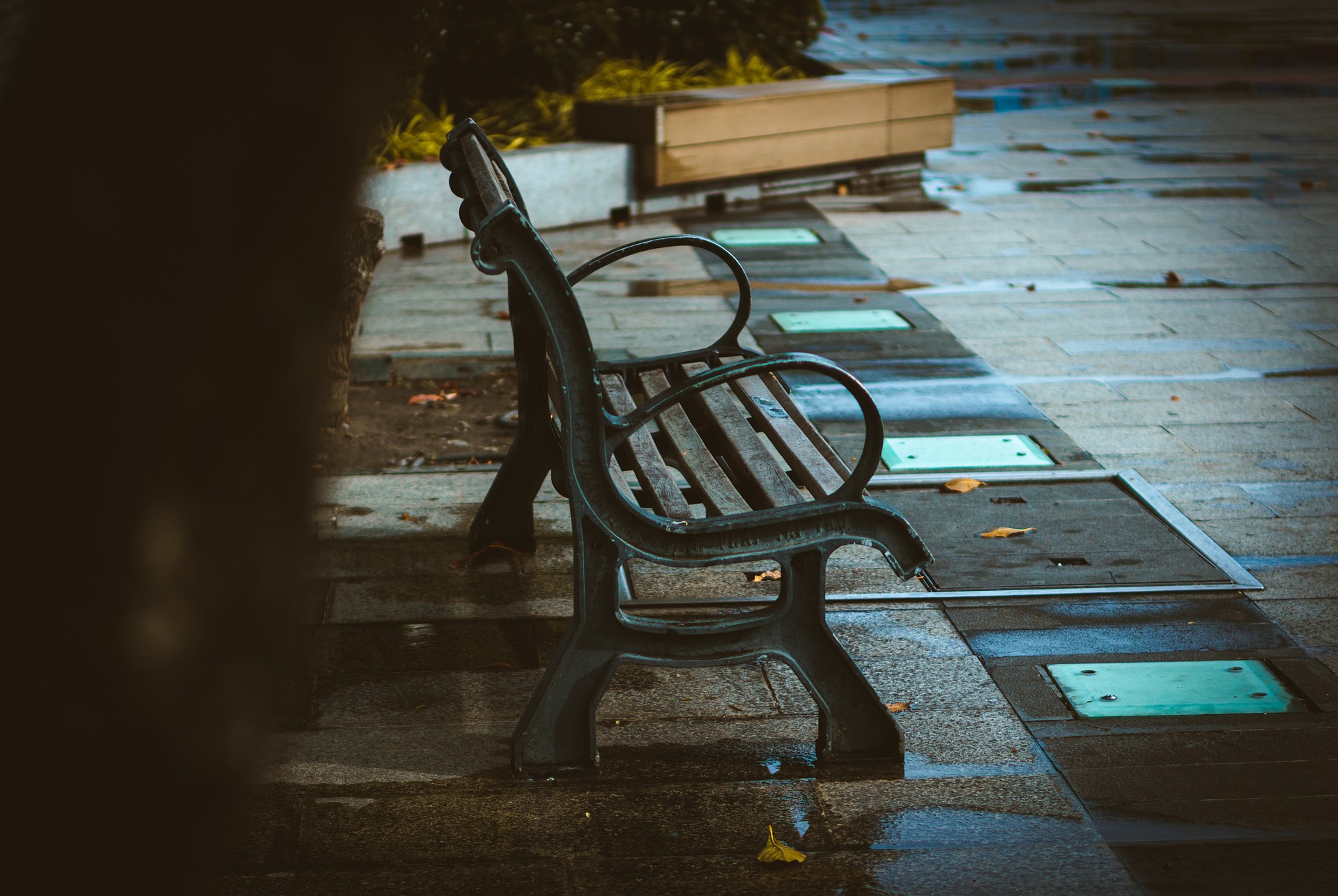
Small urban parks without shade quickly become unusable, even when everything else looks correct on paper.
This was a simple square with one bench and open space, but within minutes of sitting down the problem became obvious.
There’s a small square near us that looks fine on paper. A bench, a bit of open space, a path that connects two residential streets. If you were drawing it in a planning document, you’d tick it off as “community provision.”
But sit there for seven minutes in late morning and the problem becomes obvious.
No shade. Not partial shade. None.
This isn’t a design failure in the grand sense. It’s a sequencing problem. The bench came first. The tree either came too late or not at all. And now the space exists, but only for a narrow window each day.
We’ve seen this pattern before in smaller interventions, especially in places that technically “pass” basic checks. In the earlier test at a bus stop, the same issue showed up in a more compressed form, where a single missing shade element turned a functional stop into a dead zone
https://www.newcitiesfoundation.org/the-bus-stop-dead-zone-one-morning-two-stops-one-shade-fix/
What’s interesting is how little it takes to fix.
Not a redesign. Not a budget round. Just one of four options:
• A fast-growing shade tree (but planted properly, not as a token)
• A simple pergola structure
• A tensile shade sail
• Or even repositioning the bench by a few metres
The cost difference between “usable” and “not usable” here is minimal. The impact difference is not.
By midday, the bench was empty. Not because no one needed it, but because it stopped working.
The space didn’t fail.
It just never quite switched on.