
I went back through my notes from two earlier walks this week.
Both had thrown up the same figure.
On the market-day route there was a 160-metre gap without anywhere to sit. On the pharmacy run with Mum it was 160 metres going out and closer to 180 metres on the return.
I recorded those numbers at the time but treated them as one detail among several. There were crossings to time, kerbs to look at and queues getting in the way. The missing benches seemed less urgent.
They probably weren’t.
Distance is only part of the walk
A route can be short and still be difficult.
The pharmacy was 540 metres from the house. That is comfortably walkable on paper. Mum didn’t object to the distance either. What changed the journey was where she could stop and what happened between those stopping points.
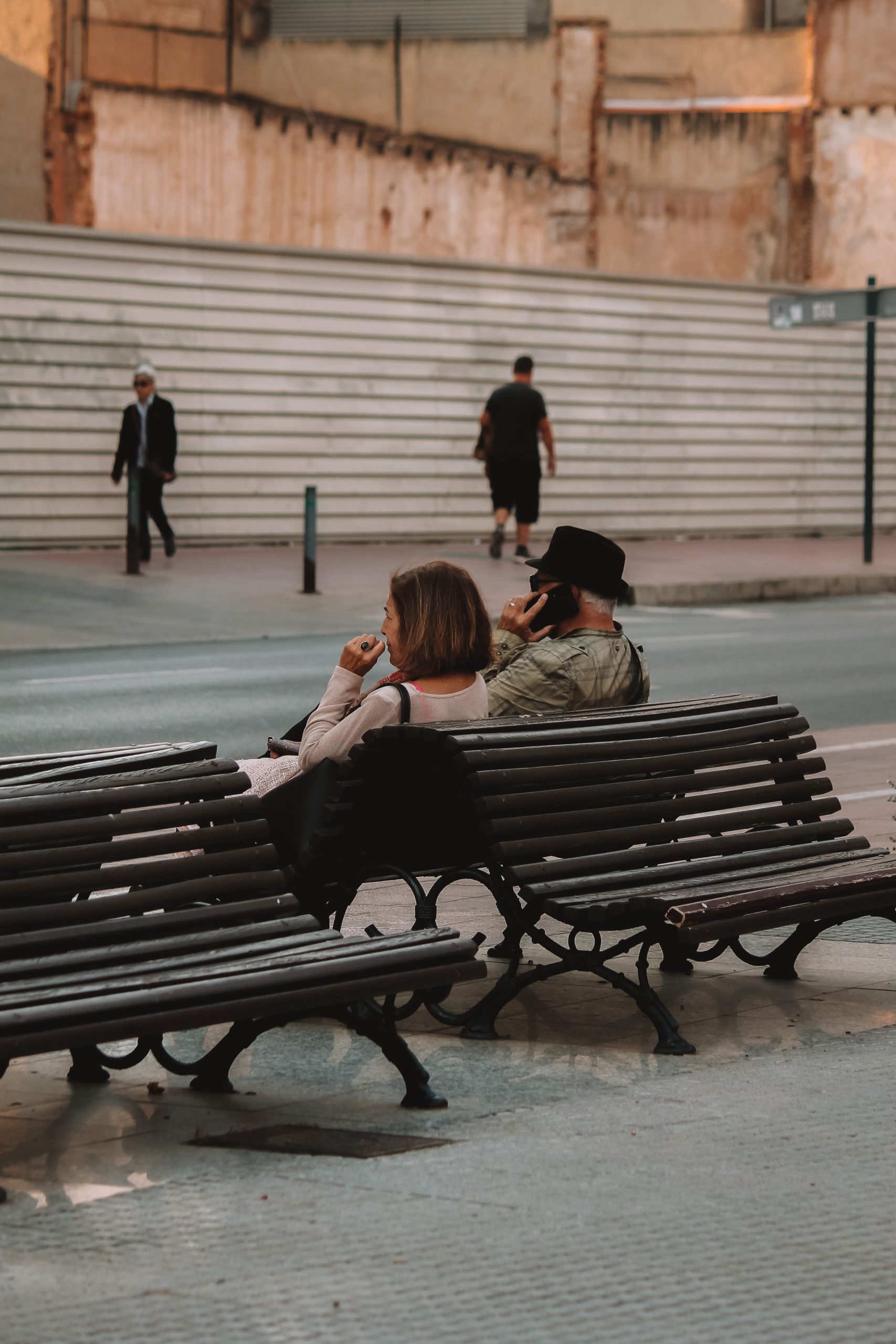
There was a bench on the route. We used it for a little over a minute on the way back. The height was fine. The sun across the seat wasn’t.
That still made it more useful than no bench at all.
The problem was the gap around it. Once we left the seat there was no second option if the trolley became awkward or the heat started to bite. You either continued or turned back.
This is something I missed when I wrote about the pharmacy run with Mum. I measured the route as a complete journey. Mum was dealing with it one manageable section at a time.
A bench has to belong to the route
Towns often count benches as objects.
Five benches in a square. Two outside the civic building. Another beside a playground. The total sounds reasonable until you look at where people actually walk.
A bench fifty metres away in a plaza does not help much if reaching it means leaving the pavement, crossing another road and then retracing the same ground.
The same applies to seats that face directly into the sun. They exist but they stop working for much of the day.
Placement matters more than the total.
On a useful walking route, each seat needs to make the next part of the journey feel possible. It should be visible before it is needed and set far enough back that a person can stop without sitting beside moving traffic. Shade makes the pause useful rather than merely available.
Armrests matter too. Not because they make a bench look finished. They help someone lower themselves and stand again without needing another person or a shopping trolley for support.
The route between destinations
Most attention goes to the places people are trying to reach.
The health centre might have accessible doors. The pharmacy might manage its queue properly. The market entrance might be wide enough for two trolleys to pass.
None of that helps with the 160 metres before you arrive.
That gap is where a short local walk can quietly become a car journey. It will never appear as a dramatic failure. Someone simply decides it is easier to be driven next time.
The market route already had a fairly obvious place for another seat. It was roughly halfway through the longest gap with space to set a bench back from the carriageway. Nothing needed redesigning. The route was already being used.
It was just missing somewhere to stop.
A better way to check a walking route
The next time I measure one of these journeys I won’t only record the total distance.
I’ll note the distance between usable seats. I’ll check whether each one is visible from the normal walking line and whether it is shaded at the time people are likely to need it. A seat on the opposite side of a difficult road will be counted separately because it serves a different route.
The useful measurement isn’t really how far someone can walk.
It is how far they must walk before the town gives them permission to stop.